World War II Records: Stateside

World War II Records: Stateside

Charles Guy Abell (Navy) Documents
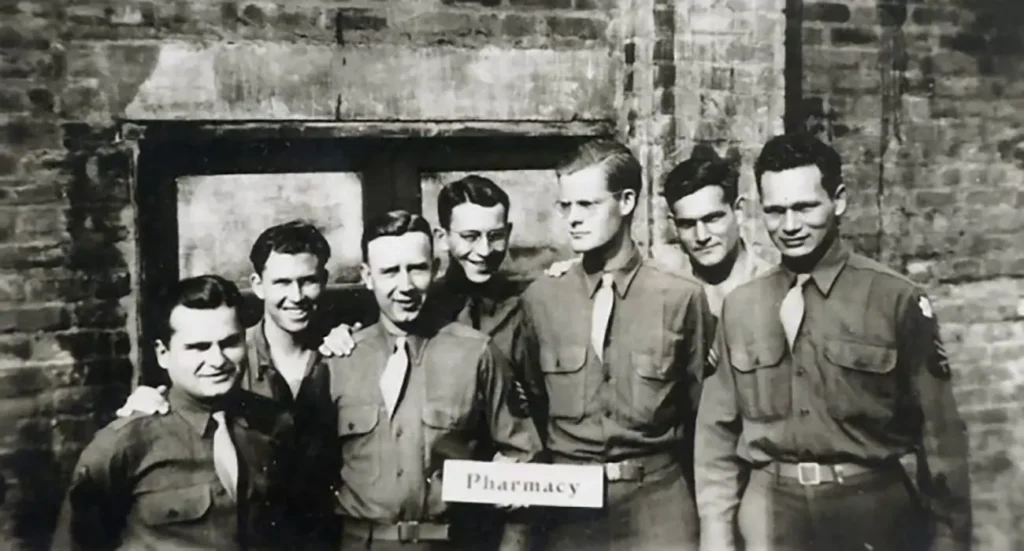
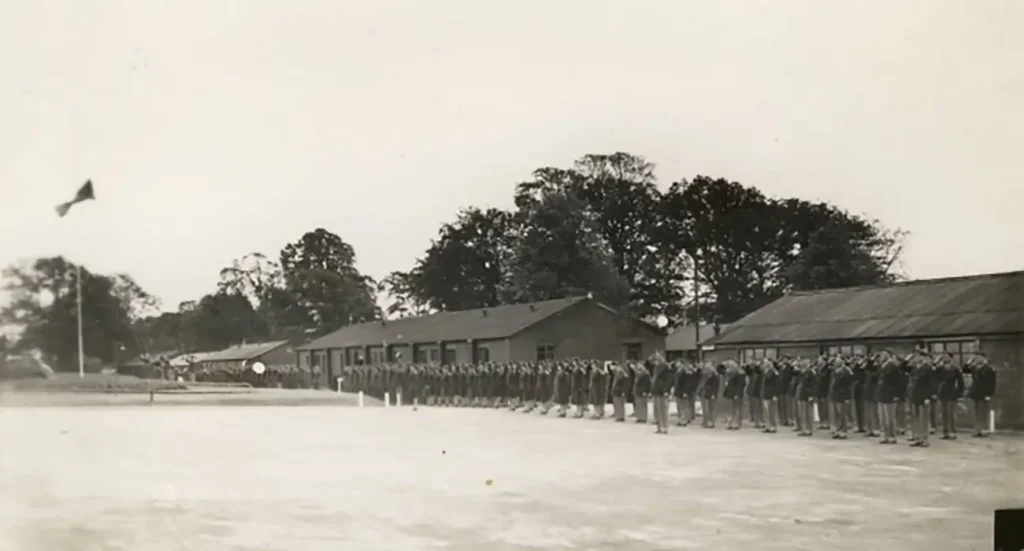
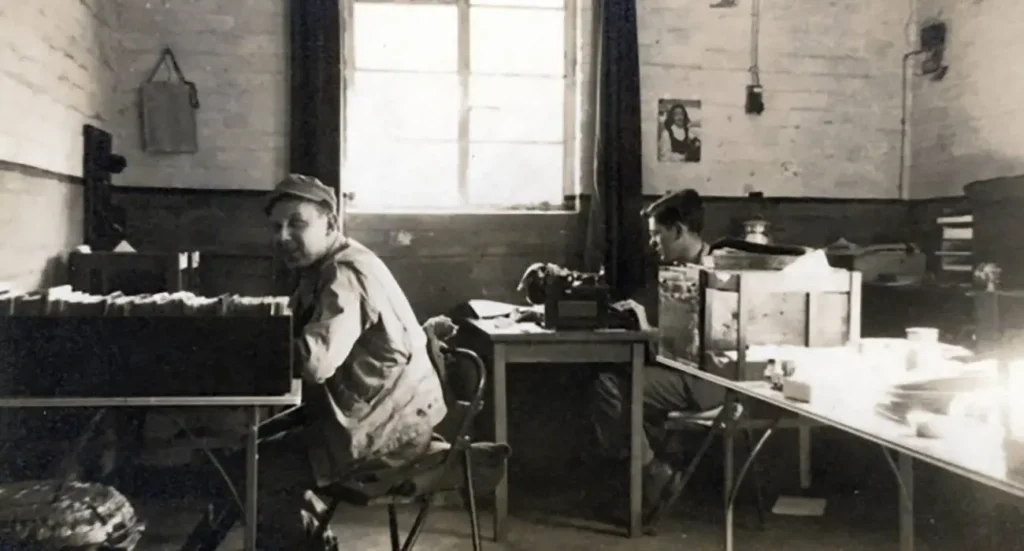
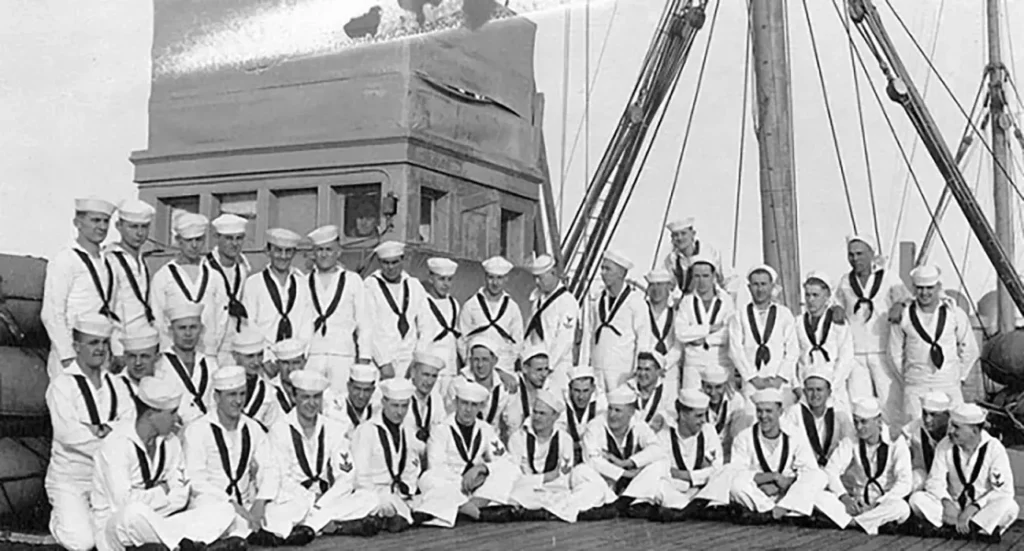
Charles Guy Abell was born in Bristol, Virginia, to Alexander “Alec” Abell and Mary Virginia “Mamie” Wade on February 5, 1909. Charles enlisted in the Navy on March 1, 1944, during World War II at the age of 31. His role was in the Aviation Support Equipment Technician regimen, which maintained, tested, and repaired the vital ground support machinery. Seaman Abell served on the U.S.S. Sapphire (PYC-2) in New London, Connecticut, until his untimely death due to drowning on the line of duty on April 22, 1945. Seaman Abell was survived by his wife Mary Elizabeth Barnes and son Wallace Guy Abell. Seaman Abell was buried in Mountain Home National Cemetery, Johnson City, TN, Plot N, 1, 1.
Luvenia Allen (Women’s Army Corps) Documents
Luvenia Allen was born on February 23, 1920, to Sebastian Allen and Lucy Scales. While she was born in Mississippi, she lived in Tipton, Tennessee, and worked on her family’s farm. During World War II, she enlisted in the Women’s Army Corps. She was assigned to the 6888th Battalion, composed entirely of African American women. This battalion received recognition for efficiently sorting and processing the backlog of mail to American soldiers. After the war, Allen married Emory Andrew Tate in 1953, and she worked as a typist. She lived in Illinois and died in Chicago on December 8, 2007.
Wilbur S. Anderson (Army, Manhattan Project) Video | Transcript 1 | Transcript 2 | Documents
Wilbur Stocker Anderson was born on 15 May 1915 in Illinois. Anderson attended Purdue University and graduated with a degree in Civil Engineering. He worked as a fire suppression engineer and fire safety inspector until 1943, when he was drafted. Anderson’s supervisor wrote the draft board requesting that he be excused due to the necessity of his job. They refused, and on September 11, 1943, Wilbur Anderson entered the Army as a military police officer. A year into his enlistment, the Army sent Anderson to Officer Candidate School (OCS), where he trained to become an officer in the Corps of Engineers. On 27 December 1944, Wilbur graduated from OCS and was stationed at Oak Ridge. As part of his duties at Oak Ridge, he transferred uranium to Chicago, where he passed the cargo to another courier who would then take the uranium to Los Alamos, New Mexico, to be used in the bomb. On 31 July 1946, Wilbur Anderson left the military. Wilbur died in early 2004, keeping his role in the development of the bomb a secret even to his family.
**Please note: Due to a large file size, a download is required to view Wilbur S. Anderson’s documents.
Erlene Aytes (Army) Audio | Transcript
Erlene Aytes served as a secretary for the three commanding officers at the Crossville Internment Camp located in Cumberland County, Tennessee. She applied for a job at the camp several months after it had opened in November of 1942. There she would encounter fights among Italian and German prisoners, unruly camp commanders, and even escaped prisoners. Ms. Aytes would spend the entire war working skillfully for the organization and care of all the enlisted men and prisoners within the camp. She insisted on being the last one to leave when it closed doors in 1945, to make sure everyone had been taken care of and returned home. Her sense of duty in such a difficult environment is a testament to the courageous women who served at home during the war.
Myrtle Baker (Women’s Army Corps) Documents
Myrtle Baker was born on January 27, 1920, in Cumberland, Kentucky, to Henry Clay Baker and Martha Jane Elliot. She enlisted in the Women’s Army Corps on December 15, 1942, and she was part of the 6888th Battalion, the African American battalion that is known for organizing the backlog of mail that American soldiers received. After her discharge in November of 1945, she married James Rickman on November 29, 1949, and both lived in Gallatin, Tennessee, before moving to Indiana. During this time, she worked as a grade school teacher. She died on April 17, 2012, at the age of 92, and she is buried in Marion National Cemetery in Indiana.
Robert W. Barbee (Army)
Robert W. Barbee graduated from the University of Tennessee in 1936 and was commissioned as a 2nd lieutenant in the Army Reserves as part of The Corps of Engineers. He was ordered to active duty on July 15, 1941. From December 7, 1942 until January 27, 1945, Barbee was stationed in Memphis in the Corps of Engineers Construction Program where he was in charge of construction at 22 military facilities in West Tennessee and North Mississippi, and one base in Arkansas. From March 15, 1945 to November 24, 1945, Barbee was stationed in The Philippines. Barbee underwent five cancer operations from 1980 to 1986 and eventually became cancer free and was feeling well enough to “complete some unfinished business.”
Phyllis Harter Barber (Marine Corps Women’s Reserve) Documents
Phyllis Harter was born on May 20, 1922, to Ralph and Louise Harter of Clinton, Ohio. During World War II, she was the second woman from Ohio to join the Marine Corps Women’s Reserve. She received the rank of corporal and worked in the Marine Quartermaster Corps at Goleta Air Base in California, as well as Santa Barbara, California. During her time in the service, she met Marine David West Barber Jr. after his return from duty in the South Pacific. They were married on March 16, 1945, in California. After the war, she graduated from the University of Tennessee in 1950 with a degree in education, and she worked as an elementary school Title I reading teacher in Florida. At the end of her life, she moved to Sevierville, Tennessee, where she died on April 22, 2010, and she donated her body to the University of Tennessee College of Medicine.
Crinna Mae Barksdale (Women’s Army Corps) Document
Crinna Mae Barksdale was born on August 21, 1917, to Dallas Thomas and Vinnie Barksdale. She grew up in Gibson County, Tennessee, and attended Lane College for her undergraduate. On March 13, 1943, she enlisted in the Women’s Army Corps (WAC), and she served as part of the 6888th Battalion. She was part of the mission to sort through the backlog of mail sent to soldiers overseas. After the war, she finished her undergraduate degree and received two MAs, one from Fisk University and the other from the University of Wisconsin. She moved to Milwaukee, Wisconsin, and worked as an English teacher and librarian. She was the first African American supervisor for Milwaukee public schools. She died on March 29, 2006, and is buried in Milan, Tennessee.
Joe Billig (Army) Audio | Transcript
Joe Billig moved to Knoxville in February 1931 when he was 12 years old. His family owned a jewelry store in Knoxville called Max Friedman Jewelers. Later, he joined the infantry a year after Pearl Harbor. Due to some issues with his feet, Billig’s company was sent overseas without him, and Billig was later told that 90% of that company was lost on D-Day. The rest of the account is Billig’s experiences in the Army.
Richard Lowell Blanchard (WNOX Radio Station) Documents
From Palmer, Illinois, Blanchard moved to Knoxville, Tennessee in 1936 after attending the University of Illinois. He worked as an emcee for WNOX for two decades and throughout World War. Blanchard was never drafted, but served in local politics during the war while also continuing wartime broadcasts through the radio station. He also worked as a broadcaster for the UT Volunteer sports teams, the Knoxville Bears and Smokies baseball teams.
Ruth Elizabeth Boggues (Women’s Army Corps) Document
Ruth Elizabeth Boggues was born to Otis Virgil Boggues and Ruth Moore on May 10, 1924, and she lived in Knoxville, Tennessee. During World War II, she went to Nashville to enlist in the Women’s Army Corps on September 12, 1944. She was assigned to the 6888th Battalion, tasked with sorting through the piles of backed-up mail that needed to be delivered to fighting soldiers. After the war, she married David Kent Lane on May 22, 1963, in Roanoke County, Virginia. She died on March 31, 2007, at the age of 82, and she is buried in Calverton National Cemetery in New York.
William F. Bowman (Marines) Audio | Transcript
William F. Bowman joined the Marines in 1943 and later became an aviation instructor. Bowman’s account details his training, his travels, and aviation production in the 1940s. William F. Bowman joined the Marines in 1943 and later became an aviation instructor. Bowman’s account details his training, his travels, and aviation production in the 1940s.
Annie Eudora Burrell (Women’s Army Corps) Document
Annie Eudora Burrell was born on November 28 to Elvis Burrell and Louisa Cole. While her birth year is disputed, she was born between 1918 and 1920 in Memphis, Tennessee. During World War II, she registered for military service with the Women’s Army Corps on March 18, 1943. She was a Private First Class assigned to the 6888th Battalion, the battalion of women in charge of sorting through the backlog of mail meant to be delivered to soldiers in Europe. She married Willie Palm and died in Memphis on December 17, 1969 around the age of 50. She is buried in Memphis National Cemetery.
W. A. Carter (Army) Transcript
W. A. Carter was part of the North Carolina National Guard and was eventually sent to Fort Benning, Georgia, for the Army Specialized Training Program. Soon, he was transferred to the Army Transportation Corps in New York City, where he worked with V-Mail. He eventually served a brief stint in the Pacific near the end of the war.
Rubye Lee Cochran (Marine Corps Women’s Reserve) Document
Rubye Lee Cochran was born on May 1, 1909 in Etowah, Tennessee. She attended Milligan College and received a master’s degree in business administration from the University of Tennessee, Knoxville in 1939. She worked as a teacher at Morehead State College until she applied for officer’s training with the United States Marine Corps Women’s Reserve in 1942. During World War II, she worked in the Mail and File Division of the Marine Corps’ Headquarters in Washington D.C. In 1943, she married Dr. Nolan Fowler, a history professor and track coach. After the war, she continued to teach at local high schools until her retirement. She died on January 16, 2004.
Edith Crisman (Women Accepted for Volunteer Emergency Service) Documents
Edith Crisman was born on June 8, 1921, and grew up in Chattanooga, Tennessee. She attended the University of Tennessee, Chattanooga, before transferring to UT Knoxville. While at UT Knoxville, she joined the Zeta Tau Alpha sorority, and she was part of the YWCA and Home Economics club. She graduated in 1943 with a Master’s degree in Home Economics. During World War II, she joined the Navy as part of the WAVES (Women Accepted for Volunteer Emergency Service), and she completed officer training with the rank of Ensign. She was stationed in Washington, D.C. at the Navy Security Department, and she was tasked with copying and delivering messages. She was released from active duty and placed in the naval reserves in May of 1946. When she was called back into the Navy in 1950, she was married and pregnant, so the military discharged her. She worked as a teacher in Ohio before returning to Chattanooga and working for her father’s appliance store. She died on February 17, 2018, at the age of 96.
Gladys Sylvertla Dailey (Women’s Army Corps) Document
Gladys Sylvertla Dailey was born to Emanuel Dailey and Lillie Wingfield on April 13, 1905, in Colombia, Tennessee. She registered for military service with the Women’s Army Corps on September 16, 1944, during World War II. She served in the 6888th Battalion, whose task it was to sort through the backlog of mail sent to American soldiers. She also served during the Korean War and Vietnam War, and she would end her military career with a SP5 rank. She died on June 23, 1989, at the age of 84. She is buried in the Nashville National Cemetery.
Evelyn Darst (Marine Corps Women’s Reserve) Documents
Evelyn Darst was born on April 22, 1919, to Guy and Blanche Darst in Knoxville, Tennessee. She attended the University of Tennessee and was the first female editor of the Volunteer Yearbook as well as a member of the Chi Omega sorority. She also worked as a writer for the Knoxville Journal’s society sections during her summer breaks. After she graduated in 1940 with a Bachelor of Arts degree, she got a job with the Ethyl Corporation, and she moved to New Jersey. In August 1943, she enlisted in the Marine Corps Women’s Reserve during World War II, and she completed her training at Camp Lejeune, North Carolina. By 1945, she was stationed at Parris Island, South Carolina. During her time in service, she married Giles Charles Belmont on March 3, 1945, and she was honorably discharged in October 1945. After the war, she worked for the Atomic Energy Commission as a technical editor, and she eventually married her second husband, Willard Reel. She died on December 11, 1990, in Atlanta, Georgia.
Harold Diftler (Navy) Audio | Transcript
Born December 14, 1927 in Knoxville, TN at Fort Sanders Hospital; father immigrated to U.S. from Austria; uncle a World War I veteran for the Central Powers Jewish family; Jewish community in Knoxville; Participated in ROTC at Knoxville High School; graduated high school in 1945; drafted into U.S. Navy; trained at Fort Oglethorpe, GA and in California in 1946; active in navy March-June 1946; guard duty in the navy; attended dental school in 1954; established a dental practice.
Stanley Duhan (I) (Navy) Audio | Transcript
Born March 12, 1926 in New Rochelle, NY; mother from Philadelphia; father from Latvia; Jewish family; early life in urban New York; studied mechanical engineering at Virginia Tech; drafted into U.S. Navy; trained at the Finger Lakes Region, MI in 1944; trained in Chicago and Gulf Port, MS in April, 1945; attended radio school at the naval station in Millington, TN; discharged 1946; G.I. Bill to finish school at Virginia Tech; became engineer in Seymour, CT; remained in reserves with Floyd Bennett Field on Long Island, NY; Industrial Engineer; trained as a reservist during Korean War; Installation Squad; Worked on the Titan and Atlas Projects in 1960s; worked for TVA.
Stanley Duhan (II) (Navy) Audio | Transcript
Postwar engineering school at Virginia Tech; commissioned as a reserve Airforce officer during the Korean War; training at Floyd Bennett Field, NY; composition of reserve unit; differences between Navy and Airforce; enlistment in Air Guard after Korean War; engineering work in military related industries; work designing componets for ICBMs and CH-47 helicopter; work with the Department of Energy and Tennessee Valley Authority; impressions of reports from Vietnam regarding equipment; design of missle silos; activities with veterans’ organziations.
Katherine Gaston (Women’s Army Corps) Documents
Katherine Gaston was born to Mr. and Mrs. Ben M. Gaston of Knoxville, Tennessee, and she graduated from the University of Tennessee in 1936. On February 14, 1939, she married British movie producer Richard Springate Vernon in Hollywood, California, and they moved to London, England. However, in 1939, she moved back to Knoxville because of the unsafe conditions in London caused by World War II. In 1941, she divorced Richard Vernon on the grounds that he abandoned her and refused to provide for her. She worked as a radio script writer before joining the Women’s Army Corps (then the Women’s Army Auxiliary Corps) in July 1942. She was the first woman from Knoxville to join the WAAC, and she was among the first group of women from Tennessee to be accepted as officer candidates. She trained at Fort Des Moines in Iowa before the army sent her to Washington D.C. and assigned her to work in intelligence for the War Department. During this time, she met Lawrence Cruikshank, an intelligence captain, and they got married in 1946. After the war, she was discharged as a captain and worked as a financial editor for an investment firm. In an article written for the Tennessee Alumnus, she talks about how proud she was to be in the Women’s Army Corps and how, if given the opportunity, she would have been one of the first to sign up again.
Lionel Greer (Army) Audio | Transcript
Born in 1923 in the Bronx; Hungarian heritage; parents immigrated through Ellis Island; childhood in the Bronx; studied French and German in high school; ROTC; worked as an accountant; served in U.S. Air Force; trained at Fort Dix; stationed in Atlantic City; AGCT Degree in June 1942; studied at City College School of Business (Baruch College); navigator; second lieutenant; radar school in Victorville, CA.
Margaret Elizabeth Heap (Army Nurse Corps) Documents
Margaret Elizabeth Heap was born to George Carson and Lucy Matilda Heap on March 18, 1907, in Knoxville, Tennessee. She attended the University of Tennessee, Knoxville, and graduated with a Bachelor of Science degree in 1931, and earned her Master’s degree in home economics from the University of Tennessee in 1934. She worked as a teacher, teaching home economics at the State Teachers’ College in Memphis, as well as at Alabama College in Montevallo, Alabama. She also taught summer courses at UT Knoxville. During World War II, she served in the Army Nurse Corps as a dietitian. Stationed in the Pacific, she was one of the first American women to set foot on the island of Iwo Jima after the battle in 1945. After the war, she remained in the military and was promoted to captain in 1949. She died on April 18, 1995, in Maryville, Tennessee.
Claude Hobler (Army) Audio 1 | Audio 2 | Transcripts
Claude Hobler joined the Army on November 14, 1940, and fought in World War II and the Korean War. Hobler was assigned to the chemical corps and was part of a mortar battalion, only to be transferred to help the Army Air Corps by teaching young cadets about chemical warfare. By the war’s end, Hobler was shipped to Japan to aid in the occupation force there.
Lima Justine (Jean) Howard (Women’s Army Corps) Document
Lima Justine (Jean) Howard was born on February 20, 1923, in Tennessee to William Edward Howard and Cordia Mae Louise Gray. During World War II, she enlisted in the Women’s Army Corps in 1943 and was assigned to the 6888th Central Postal Directory Battalion. This battalion sorted through the immense backlog of letters sent to American soldiers overseas. After her discharge from the Army on March 16, 1946, she married Charlie Henry Freeman in 1948. After he died in 1952, she married Harold Brooks Palmer. She served two terms as a commissioner in Henry County, Tennessee, making her the first woman and the first African American woman to serve in that role. She died on February 6, 1984, and she is buried in Maplewood Cemetery in Paris, Tennessee.
Aston Kennedy (Local Historian) Audio | Transcript
Aston Kennedy’s recording provides the listener with some history of the Tennessee State Guard. Kennedy discusses certain figures and events about this Guard’s history.
Louise Landess (Marine Corps Women’s Reserve) Documents
Louise Landess was born on December 16, 1919, to William McKenzie Landess and Mabel Olivia Keith in Greenville, South Carolina. During her childhood, she moved to Knoxville, where she attended the University of Tennessee, Knoxville. She studied home economics and was involved in many things, including the Sigma Kappa sorority, of which she was vice president, the Volette Drill Team, the Rifle Team, and the University Chorus. After she graduated in 1941, she worked as a home economics extension demonstrator until 1943. She enlisted in the Marine Corps Women’s Reserve on February 2, 1944, at the height of World War II, and was stationed at Camp Lejeune, North Carolina. She was discharged on January 18, 1946, and she married Robert Wilmes, whom she had met during her service, in July 1946. The couple lived in Washington, D.C., until 1951, when they moved to Oak Ridge, where Robert Wilmes worked as an Atomic Energy Commission scientist. Louise Landess became involved in the American Association of University Women and the Catholic Women’s Club. On August 26, 1955, she died at the age of thirty-six, following a two-year illness.
Ilda Ruth League (Women’s Army Corps) Document
Ilda Ruth League was born on February 2, 1923, to Dr. James Edward League Sr. and Nancy Jane Lyle in Nashville, Tennessee. In 1944, she was living in New Jersey, where she enlisted in the Women’s Army Corps on January 4, 1944. She was assigned to the 6888th Central Postal Directory Battalion, the battalion tasked with addressing the backlog of soldiers’ mail that had piled up. In 1949, she married Alfred “Jack” Northern and moved to Roosevelt, New York, in 1952. She and her husband made a significant impact on their community by organizing a neighborhood watch team called the “Watchful Eye.” Ilda L. Northern died on February 26, 2008, and she is buried in Calverton National Cemetery in New York.
Jim Lovett (Army, Calvary) Audio | Transcript 1 | Transcript 2
Jim Lovett enlisted in the army in the Summer of 1940. Lovett was sent to the 3rd Cavalry and trained at Fort Myer, Virginia. Lovett’s account traces his trainings with horses, his training of other recruits, and his short time in the Philippines.
W. Ralph Lufkin (Army) Audio 1 | Audio 2 | Transcript 1 | Transcript 2
W. Ralph Lufkin enlisted in the Army in 1941 and during basic training decided to specialize in the ministry, eventually being assigned as a Chaplain’s Assistant at Camp Tyson, Tennessee. Eventually, Lufkin would be assigned to an engineer combat group. Lufkin’s account details his experiences as a military chaplain alongside his time stateside as his unit was never officially moved out to the European or Pacific theaters of war.
Charles Manning (Army) Audio 1 | Audio 2-3 | Transcript 1 | Transcript 2 | Transcript 3
Charles Manning was part of the First Battalion of the 157th Field Artillery in the Colorado National Guard. This recording is a sermon he gave, indicating that God chose the United States to stop World War II. The recording is full of religious fervor.
Halcy Margaret (Peggy) Murrian (Women Accepted for Volunteer Emergency Service) Documents
Halcy Margaret (Peggy) Murrian was born on March 19, 1922, to James A Murrian and Halcy Hammond Murrian in Knoxville, Tennessee. She attended the University of Tennessee, Knoxville, where she received a degree in home economics and was a member of the Kappa Delta sorority. At age twenty-one, she joined the WAVES on September 4, 1943, with hopes of serving in the medical field. She completed boot camp at Hunter College in New York and received the rank of Yeoman 3rd class. She married Ensign Richard Wampler in Washington, D.C., on June 18, 1944. She was discharged less than a month after, on July 16, 1944. After the war, she worked as a teacher for over twenty years. She died on March 18, 2000, in Knoxville.
Lindsey Nelson (Talk) Video | Transcript
The following is a talk given by Lindsey Nelson to the East Tennessee Historical Society on February 4, 1986, as recorded by Charles Johnson of the Department of History, University of Tennessee. The talk details local Tennessee history with the war, including that of Robert Reese Neyland, who was an American football player, coach, and officer in the United States Army, reaching the rank of brigadier general.
Charles Dalph Ottinger (Army Air) Documents
Charles Dalph Ottinger born on February 27th of 1923 to Milburn Estel Ottinger and Bonnie Mazuri Wills in Knoxville, Tennessee. At the age of just 19 years old, Ottinger enlisted in the United States Army where he would serve as a flight engineer on B-17 fortress bombers. During his time in the Army, Ottinger earned the rank of Sergeant. On the night of August 28th or 1943, Ottinger tragically lost his life during a routine training flight in which three planes collided in the air killing 14 men in total. Ottinger was laid to rest at the Oak Grove Cemetery in Greenville, Tennessee and at the time was survived by his mother, father, and sister.
Rocky J. Petrella (Military Police) Audio | Transcript
Rocky J. Petrella worked as a welder in Niles, Ohio, building 40-millimeter anti-aircraft guns in 1939. Petrella was inducted into the Army Air Force in June 1942. He was assigned to the military police at Mitchell Field Air Force Base in New York. He describes his experiences and an interesting anecdote of the FBI looking for AWOL soldiers in New York City.
Georgia Mae Rainer (Women’s Army Corps) Documents
Georgia Mae Rainer was born in 1921 and lived in Memphis, Tennessee. In May of 1944, she enlisted in the Women’s Army Corps, and she served in the 6888th Central Postal Directory Battalion during World War II. This battalion was in charge of sorting through the enormous backlog of mail sent to soldiers overseas. She was discharged on December 24, 1945. In 1947, she married Eddie Thomas, and she worked as an employee of the Memphis Veterans Medical Center. She died on May 28, 1986, at the age of 64 and is buried in Memphis National Cemetery.
Josephine Rawlings (Women Accepted for Volunteer Emergency Service) Documents
Josephine Rawlings was born on December 23, 1921 to Lynn Porter Rawlings and Willie Georgia Elder. She grew up in Sevierville, Tennessee and was a student at Blackstone College for Girls in Blackstone, Virginia before she attended the University of Tennessee, Knoxville. She graduated from UT Knoxville in the summer of 1942 with a bachelor’s of liberal arts degree. During her time at UT Knoxville, she was part of the honor societies: Phi Kappa Phi and Pi Lambda Theta. Afterwards, she taught at an elementary school in Clinton, Tennessee before she joined the WAVES during World War II. She completed officer’s training at Smith College in Northampton, Massachusetts, receiving the rank of lieutenant junior grade. Throughout the war, she was stationed in New Orleans, Louisiana and Atlanta, Georgia. She married Capt. James Nicholas Watson on April 6, 1946, and they lived in Florida. She died on April 6, 1989 in Jacksonville, Florida.
Katherine Ann Switzer (Women’s Army Corps) Documents
Katherine Ann Switzer was born on June 18, 1916 in Tennessee to John Albert Switzer and Emma Massey Lewis. She grew up in Knoxville where her father was the head of the University of Tennessee’s school of engineering hydraulics department. She graduated from UT Knoxville in 1938 with a bachelor’s of science in education. While at UT Knoxville, she was in the Kappa Delta sorority and participated in intramural swimming. After graduation, she worked as a teacher in Knox County before joining the Women’s Army Corps on August 9, 1943 during World War II. She was stationed at Randolph Field, Texas, and she received the rank of sergeant before being discharged on November 25, 1945. After the war, she moved to Dayton, Ohio, and she married 1st. Lt. Paul U. Craver on September 5, 1953. She later moved to Kingsport, Tennessee in 1965, and she died there on March 17, 1987 at the age of 70 years old.
Ellen Cleminshaw Weaver (Manhattan Project, Civilian Chemist) Documents
Ellen Weaver was a female chemist from Oberlin, Ohio who worked in Oak Ridge, Tennessee on the Manhattan Project. Weaver went on to earn a PhD at California State and worked as faculty at San Jose State University. She also served as president of the Association of Women in Science.
Ed Westcott (Manhattan Project, Army Corps of Engineers, Photographer) Documents
Ed Westcott was from Chattanooga, Tennessee. He worked as a photographer for the Army Corps of Engineers on New Deal projects like the WPA before the war. He was posted as the only photographer given full access to document the Manhattan Project in Oak Ridge, Tennessee during World War II. He continued to work for the Atomic Energy Commission after the war.
Wilda Winningham (Women Accepted for Volunteer Emergency Service) Documents
Wilda Winningham was born on November 8, 1917, to Horace Virgil Winningham and Alma Lee Winningham in Fentress County, Tennessee. During her childhood, her family moved to Knoxville, where she attended the University of Tennessee. She received a degree in home economics and majored specifically in textiles and clothing. During her time at UT Knoxville, she was involved in the Volettes Drill Team, the Home Economics Club, the Tennessee Valley Girls Club, UT Chorus, and the “Tennessee Farmer” staff. From 1941 to 1943, she worked as a home economics teacher in Crossville, Tennessee, before returning to Knoxville to work for the Children’s War Services Nursery Schools. On March 4, 1944, she joined the WAVES and completed boot camp at Hunter College in New York. After receiving the rank of 1st Class Petty Officer, she was stationed in Kingsville, Texas, where she served at the naval air station. She was discharged on May 3, 1946. After the war, she married Thomas E. Johnson Jr. on April 16, 1949, in Scott County, Tennessee, and she worked as a home economics teacher in Beatrice, Alabama, until 1951. She died on December 9, 1990, and she is buried in Knoxville, Tennessee.
Marguerite Yancey (Women’s Army Corps) Documents
Marguerite Yancey was born on August 12, 1904 to Nathan A. Yancey and Bertha Yancey, and she grew up in Ripley, Tennessee. She was a prolific writer as a child, and the Memphis newspaper, The Commercial Appeal, often featured her poems, stories, and letters on the Children’s Page. After graduating from Ripley High School, she attended the University of Tennessee, Knoxville, and received a degree of liberal arts. While at UT, she was part of the Delta Delta Delta sorority, wrote for the Orange and White newspaper, and was involved in many other clubs. She received a master’s in English Literature from the University of California, and then left for East Asia. There, she worked as a newspaper woman for various newspapers and eventually became a war correspondent for the Sino-Japanese war. During World War II, she joined the Women’s Army Corps (then the Women’s Army Auxiliary Corps) and worked as a public relations officer at Fort Des Moines before the army transferred her to Washington D.C. to work at the Headquarters for the Army Air Force. She served with the WAC for three years, and she continued to serve during the Korean War, ending her military career as a 2nd Lieutenant. She died on October 23, 1996 and is buried in Dyer County Memorial Gardens in Dyersburg, Tennessee.